
Even with clean hands, every action counts.
Temperature control and food hygiene are often discussed, but there’s another equally crucial factor: how meals are handled before being packaged and delivered.
For caterers and food service providers, minimizing handling during food packaging is essential to limiting the risk of cross-contamination.
Every contact is a potential risk
Filling a meal tray, adjusting it, repositioning a lid… each of these actions can introduce contaminants. And the higher the production volume, the more these actions multiply.
Even in a clean commercial kitchen, each additional touch increases the risk of contamination.
The limitations of manual-lid containers
Meal trays with snap-on lids come with several drawbacks:
- Risk of incomplete closure or frequent lid adjustments
- Direct manual contact required to press or align the lid
- Longer processes that multiply handling, and increase contamination risks
In a fast-paced kitchen, these extra steps can compromise the safety of prepared meals.
Thermal sealing: A powerful yet invisible barrier
Choosing a sealing system offers several benefits:
- A single sealing motion, no manual adjustments needed
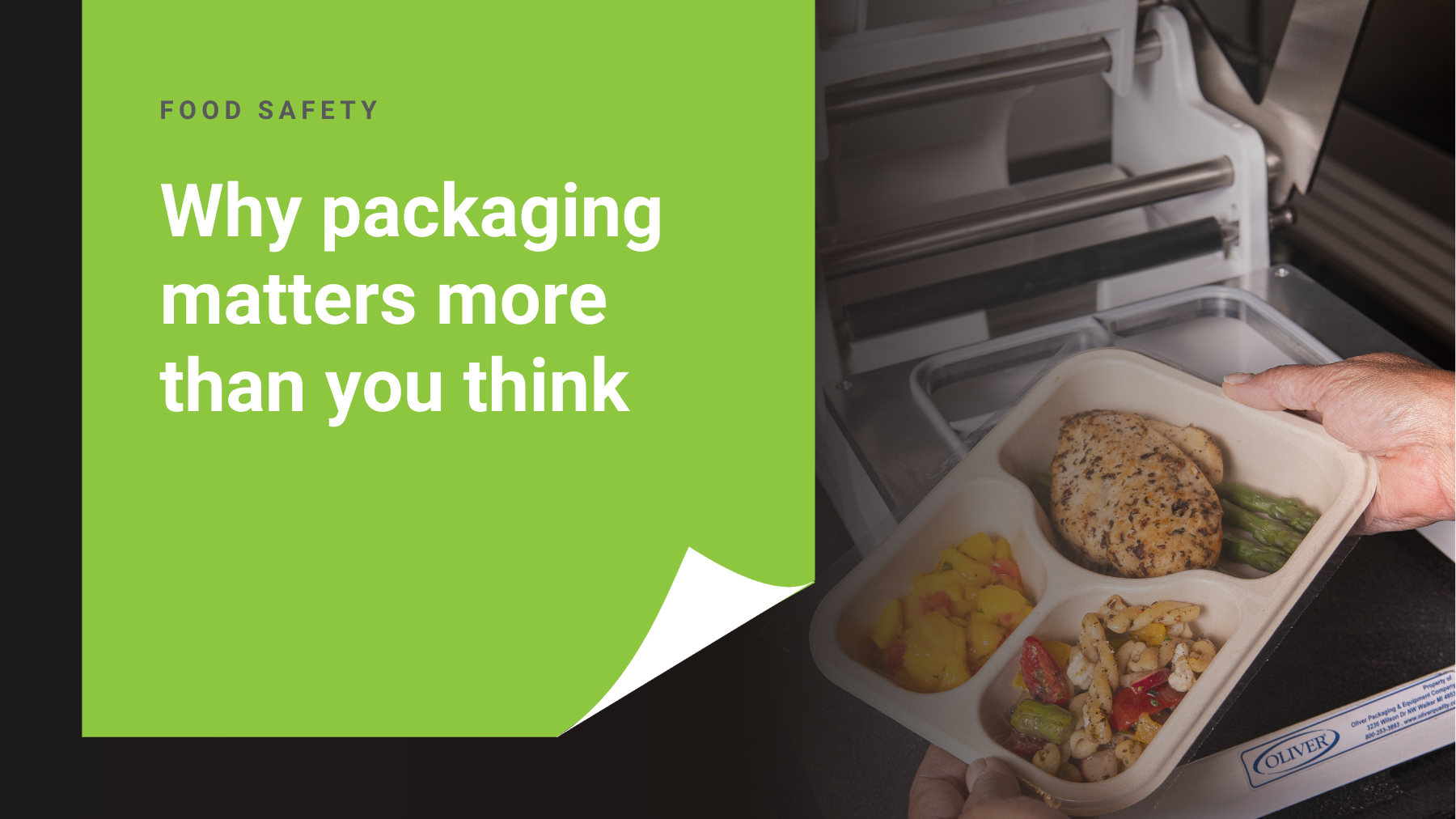
- A uniform, tamper-evident, air-tight seal that fully protects the contents
- Fewer handling steps, leading to a cleaner and faster production line
It’s a discrete solution, but extremely effective at securing meals and maintaining freshness.
Well-designed trays support food safety
The design of your meal containers directly impacts hygiene:
- Rigid trays prevent spills and reduce manual handling
- Perfect compatibility with sealing films eliminates the need for readjustment
- Secure stackability reduces handling after packaging
Solpak’s plant-based trays combine durability, thermal performance, and compostable materials, a responsible choice for your operation.
How to set up a safe packaging workflow
A secure food packaging system relies on three pillars:
- A smooth workflow from portioning to meal delivery
- The right tools: sealing equipment and compatible trays
- A trained team focused on safe, efficient handling
Example of an optimized workflow:
A three-station system: meal portioning at station one, thermal sealing at station two, then immediate placement into insulated delivery bags at station three. This linear setup cuts out unnecessary back-and-forth, reduces manual contact, and allows each team member to focus on one task — speeding up production while maintaining high hygiene standards.
Packaging: Your silent food safety ally
Food safety also depends on avoiding unnecessary handling. Choosing the right containers and a thermal sealing system is an effective way to protect both your meals and your customers.
At Solpak, we support caterers and foodservice providers with packaging solutions designed to secure and simplify operations while respecting the environment.
Want to evaluate your current packaging workflow?
Our team can help optimize it. Reach out for a free analysis or to try our compostable, sealable trays.
